Wednesday, December 12, 2007

Best b[r]and ever?


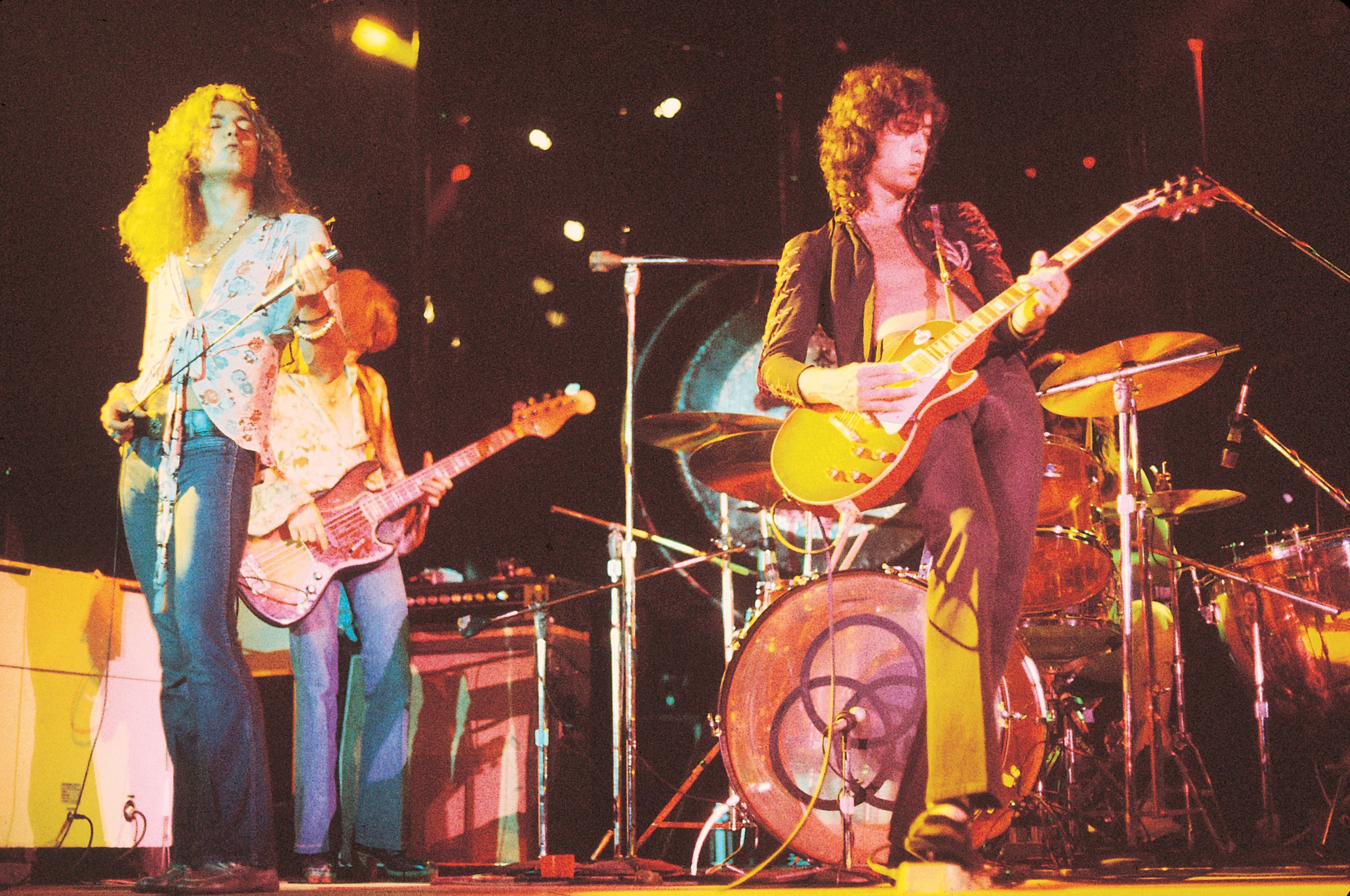
The readers’ poll in tonight’s edition of thelondonpaper asks whether Led Zeppelin were the greatest band ever.

The question has sent me scurrying back through the depths of my ipod, listening to their songs with an attention I haven’t paid since high school.

I tend to think questions and polls about the best band/ album/ song are a bit of a waste of time. All they do is encourage people to attempt the impossible - constructing logical scaffolding around their (emotionally based) tastes. It’s seldom a seemly sight. (Besides the answer is clearly Belle and Sebastian/ Her Majesty (The Decemberists)/ I’ve been loving you too long (Otis Redding). And I can prove it with algebra.)

But Led Zeppelin thing has a certain weight to it (pardon the pun). Because, questions of how good they were as a band aside, they were a spectacularly consistent brand.

And what did the brand stand for? Power.

Virtually every component of their music was some kind of dominance display. The force with which John Bonham hit the drums (so loud, apparently, that they often used to set up the mics in the next room when recording to avoid redlining the meter). The range and power of Robert Plant’s vocals. The lightning speed of Jimmy Page’s guitar playing. The Terminator-like precision of John Paul Jones’s basslines. And of course the sheer volume of their live shows.

It’s difficult to think of another band that hewed so single-mindedly to an aesthetic, from Plant’s tight pants to the Norse god imagery that became their leitmotif.

Even their quieter moments, you get the feeling, were only there to make the loud bits seem more powerful. (And of course to casually show off their virtuosity in that area too).

Sure, there have been louder, faster and heavier bands since. Possibly there have even been more technically adept ones.

But most of those sacrifice some elements for the benefit of others – the boring, root-note bassline that serves to anchor the guitar; the unimaginative melody that simply echoes the killer riff.

At risk of reducing art entirely to commerce, I wonder how much of their success stemmed from staking out a compelling proposition and executing it brilliantly?

Tuesday, December 11, 2007

Simplicity (again)

Left to my own devices, I'm a "more" kind of a guy.

In the kitchen, I'm always convinced that a hint of just one extra flavour will set the whole dish off.

In the studio, I'm always the one who says "wouldn't it be great if we doubled that slide guitar part with a glockenspiel. And a horn section. And a childen's choir."

So, when i first started studying advertising, the whole aesthetic of simplicity was kind of hard for me to grasp.

I liked complex music, complex books, complex films - why should ads be any different?

The answer, of course, lies in the willingness of the audience to engage.

I got that eventually.

But I still occasionally see an ad that's not single minded, that buries its central idea in a bunch of other fun stuff, but still works.

Normal creative aesthetics would dictate that this whole spot be about the hairy chest comparison.
But on the whole, i think it's stronger as it is, with that thought as just one of a procession of gags.

Saturday, December 1, 2007

Um...your strategy is showing

Despite myself, i quite like this little viral from Drambuie.

It's certainly not because "yobs don't like it" is an original strategy, or because it's executed with any finesse here.

In fact, I always kind of thought the way snobbery worked best was when you had some sort of a figleaf to hide behind, like when Lynne Truss types cast themselves as selfless protectors of clear communication, rather patrolmen policing class borders.

I think I like it because, despite its fairly cringeworthy endline ("For princes, not bogans"), it's actually not too hard on the guys it's supposed to be satirising.

In fact, I think most of them would be rather pleased with how they come off here.

The question is, in a country where working class credentials are so highly valued that even deeply religious mandarin-speaking ex-diplomats feel compelled to drop into broad strine and call everyone "mate" when they're running for prime-minister, will more people in the target audience come down on the side of the bogans?

Tuesday, November 20, 2007

144 words, I'm told

Northern Planner has some nice thoughts on presentations here.

They put me in mind of this, a reminder that, as the man said, "in a work of genius, execution becomes content".

Friday, November 16, 2007

Miranda Writes

So i've been kinda obsessing about digital at the moment. The spec spec slots in my book are full of all sorts of pieces that aim to fully exploit the possibilities of the medium and show how young and hip I am.

And yet the best piece of digital I've come across recently has not even the vaguest whiff of 2.0 about it.

In fact, techologically, it could have been made ten years ago, maybe even fifteen.

Tellingly, it's not been done by an agency. I doubt it could have been; it relies too heavily on tone of voice, which is one of the hardest things to protect from the 250 people client side who want to "add some value".

It's by this woman, Miranda July.

There's clearly no need for a picture here; I'm just adding it 'cos I have a crush


Best of all, it works. I found the site on a Thursday, went back to it a couple of times on Friday, and bought the book on Saturday.

Here's the site.

Wednesday, November 14, 2007

Research results - Guinness/ Artois

Sample size:
1

Methodology:
To avoid observer effect, subject was unaware she was participating in research. She was studied while sitting in her own home on her sofa, watching television. To avoid arousing suspicion, researcher posed as her long-term partner.

Stimulus 1: Guinness Cog


Subject was exposed to Guinness ad in premier spot during "Californication". She was either unaware of preceding hype or unmoved by such.

After observing between 5 and 6 seconds of advertisement, subject's attention turned to article on Amy Winehouse in gossip magazine.

When questioned about Guinness ad at conclusion of commercial break, subject denied that one had been aired. In the face of subject's superior skills of reason and argument, researcher was forced to acknowledge that said spot could not possibly have aired. (Subject has tutored logic at a tertiary level. She can build a Turing Machine; if he's perfectly honest, researcher doesn't quite understand what one is)

Stimulus 2: Artois- Pass it on


Subject seemed to be focused on this ad for about the first 10-12 seconds. She then began to relate a story about something that happened at work that day. When researcher attempted to draw her attention back to the TV, as he was quite curious to see the ad, he was immediately silenced so story could continue.

Recommendations

Perhaps consider introducing Amy Winehouse into Guinness ad?

Make "Pass it on" interactive by including a url where people can pass on their work stories. Either that or add more monkeys (subject likes monkeys).

Post Script:

Although the £10 million Guinness spot (which researcher, for the record, rather likes) failed to engage subject's attention, the much lower-budget ten second spot that followed it did raise a couple of chuckles. And that's all you can ask for really.

Friday, November 9, 2007

Evidence against me

Number 378(b) of the quixotic positions I constantly take with account people, clients and even occassionally creative directors is that people aren't stupid.

Sometimes they may be ignorant - they may, for example, not get my hip pop-culture references. But all of our spheres of knowledge are limited. Joe and Betty Barbecue probably know a shitload more about V8s and football than I do. It's just that, for fairly arbitrary reasons, some spheres have higher value placed on them than others.

Likewise, they may be busy or distracted, and so attending to my lovingly crafted 30 second spot with less than their full attention. That doesn't mean that, if I do manage to do something that engages them, they can't bring fairly sophisticated interpretive and reasoning skills to bear.

I'm fairly confident I'm right about this. And having grown up in a working class neighbourhood myself, I've seen how badly it can misfire when some halfwit private school boy with a bad BCom decides to run a piece that patronises ordinary, working people.

But occassionally, I see something that challenges my faith.

Like this piece from the manchester evening news, detailing how a scratch card has had to be withdrawn because punters had difficulty understanding negative numbers.